DST (Disturbance Storm Time) and Aurora
DST ( Disturbance Storm Time ) and Auroras: Explained with Coffee.

Imagine Earth’s magnetic field is like your barista — always calm, collected, and keeping things running smoothly. No matter what’s going on, they’ve got your back and keep the shop from turning into chaos. That’s our geomagnetic field — protecting us from all the Sun’s drama.
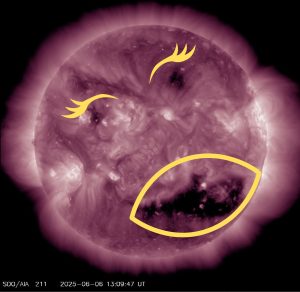
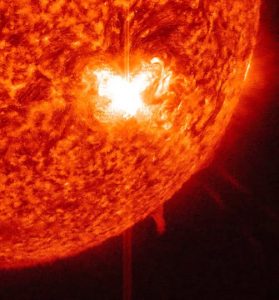
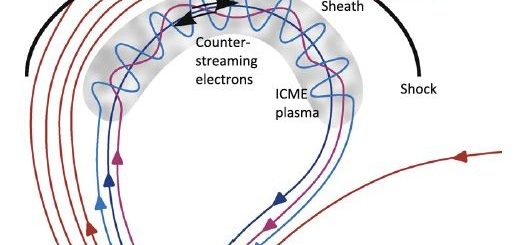
Now, sometimes the Sun acts like it’s had ten espresso shots too many and sends out a solar storm — basically a super-charged energy blast full of hyperactive particles (think of them as annoying customers in a caffeine frenzy). These charged particles don’t hit Earth directly. Instead, they get caught in our magnetic field and start spinning around the Earth like they’re doing laps.
This creates something scientists call a ring current — a giant loop of electrical energy circling the planet, kind of like when a coffee machine is running overtime and starts steaming like crazy.
Here’s where the DST index comes in.
Think of DST as the coffee shop’s stress level meter:
If DST is close to zero? All good. Chill café vibes.
If DST goes really negative? Uh oh. The espresso machine is overheating, the barista’s losing it, and someone’s spilled oat milk everywhere. That’s when Earth’s magnetic field is under serious pressure.
The more negative the DST, the stronger the geomagnetic storm. Just like a really bad coffee day, it can also mess with power grids and satellites. So… fun and chaos! The Aurora does not happen right away. You will still need to keep an eye on Substorm strenght on Glendale app.
Also, if you’re out chasing and not sure when to pack it up, keep an eye on the DST readings. If both the observed and predicted DST are still sitting at strong levels, it might be worth hanging around a little longer — even if things look quiet.
I’ve been burned before… Called it a night at 10:00 PM, only to find out the sky exploded with colour at 10:10 PM. Let the DST be your “should I stay or should I go” guide!
You can check DST in real time using the SpaceWeatherLive app — it’s like checking the café’s stress level before ordering your triple shot latte.
“Observed DST” is the reading of how disturbed Earth’s magnetic field is — based on data from ground stations around the world. Think of it as the actual mood of the planet right now.
“Predicted DST” is the forecast — like a space weather guess — made using solar wind data and clever machine learning models. It tells us what the geomagnetic field might feel like soon.
To sum it up:
* Sun goes wild
* Sends out charged particles
* They run wild like caffeine zombies
* Earth’s magnetic field gets pushed around
* DST drops = Potential lights in the sky (Aurora time!). Keep an eye on Substorm strenght on Glendale to know when the next burst is coming.